Woodstock grew up around the railroad that arrived in 1879 and was chartered in 1897. Its 1912 depot is on the National Register. Landmarks, museums and tours.
Last checked Oct. 6, 2026. Facts come from the City of Woodstock’s history page and announcements, the National Park Service’s National Register file for the Woodstock Depot and History Cherokee. Questions: Woodstock Visitors Center, 770-924-0406.
Woodstock is a railroad town. The railroad came in November 1879, the city says, when the Marietta and North Georgia Railroad finished its line from Marietta to Canton through what was then a small settlement. In its early years, the city says, Woodstock had 300 people on 960 acres. It was chartered as a city in 1897, and it marked its centennial in 1997.
Visit
- Woodstock Visitors Center in the historic Dean’s Store on Main Street: 770-924-0406, Monday to Saturday 10 a.m. to 5 p.m., Sunday noon to 5 p.m.
- Cherokee County History Center, 221 E. Marietta St., Canton: 770-345-3288, Tuesday to Saturday 10 a.m. to 5 p.m.
- Downtown walking tours: last Thursday of the month, April to October, through Visit Woodstock GA
How Woodstock began
The city’s own history says the first gristmills in the county stood near Woodstock, powered by the Little River, Noonday Creek and other streams, along with wood carving and yarn spinning. There was mining nearby: the old Kellogg Gold Mine and several others were within a few miles, and mica and kaolin were found in the area. By the 1890s Woodstock was shipping 2,000 bales of cotton a year, and a number of Woodstock developers helped introduce new farming methods to the county.
Nobody knows for certain how the town got its name. The city offers two stories: that it came from Sir Walter Scott’s novel Woodstock, or from a Mr. Woodstock who settled in the area and started a school.
Timeline
| Year | What happened | Source |
|---|---|---|
| 1875 | Dr. G.A. Merritt builds the Dean House, now the oldest home in Woodstock | City of Woodstock |
| 1879 | The Marietta and North Georgia Railroad completes its Marietta-to-Canton line; the railroad reaches Woodstock in November | City; NRHP nomination |
| 1890s | Woodstock ships about 2,000 bales of cotton a year | City of Woodstock |
| 1897 | Woodstock receives its city charter | City of Woodstock |
| 1912 | The Louisville and Nashville Railroad builds the current depot | NRHP nomination |
| 1949 | Passenger service at the depot ends | NRHP nomination |
| 1995 | The Woodstock Depot is listed on the National Register (June 20) | National Park Service |
| 1997 | The city celebrates its centennial; the July 4 tradition begins | City of Woodstock |
| 2008 | The Greenprints trail plan is adopted | City of Woodstock |
National Register of Historic Places
We found one National Register listing in Woodstock in the National Park Service’s records.
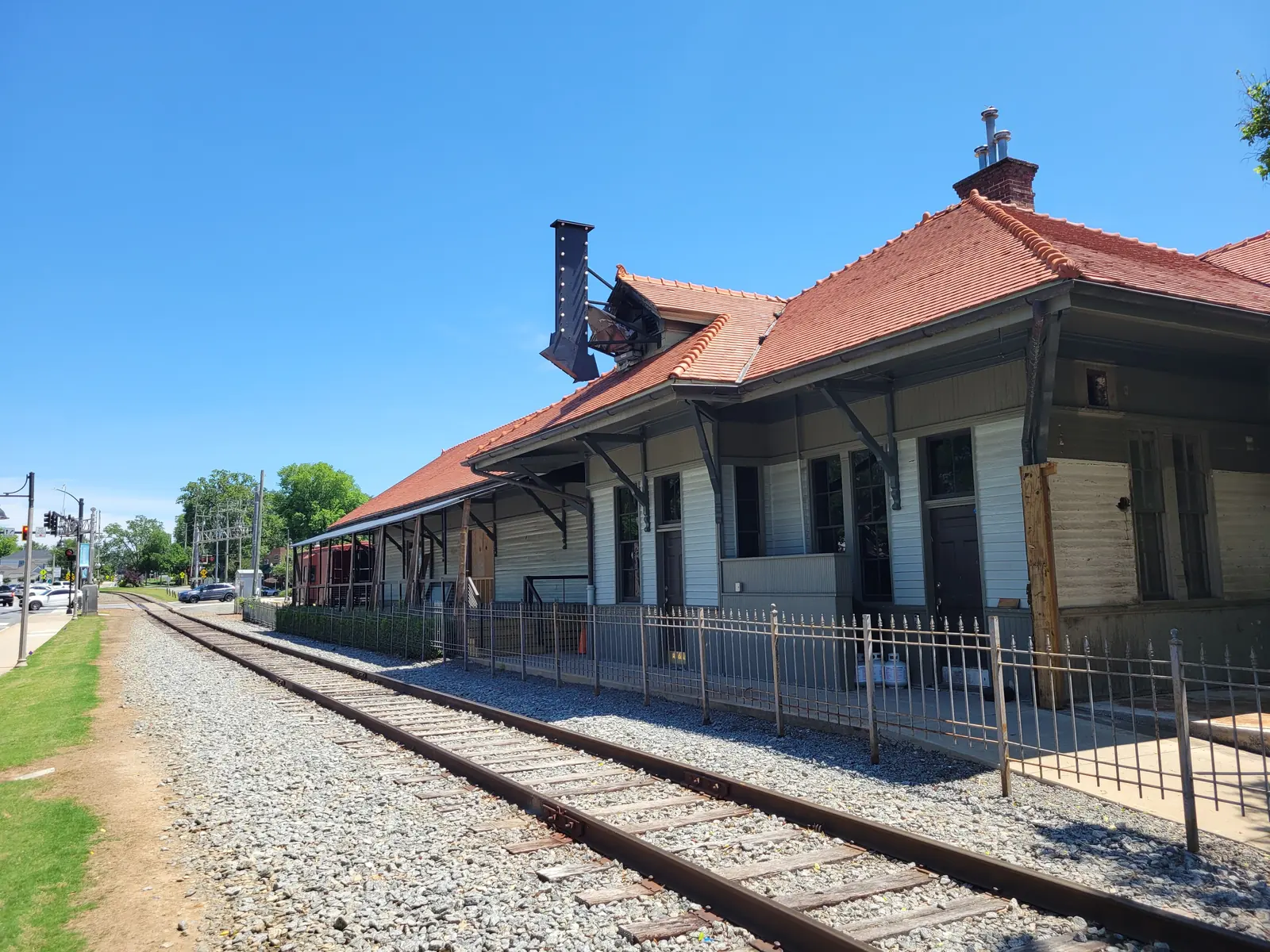
Woodstock Depot, 2 N. Main St. (State Route 5). Listed June 20, 1995. The nomination describes a wood-frame combined passenger and freight station built in 1912 by the Louisville and Nashville Railroad to replace an earlier depot, “a good example of a turn-of-the-century small-town railroad passenger and freight station.” It is significant for its architecture and for transportation; passenger service ended in 1949. The depot still stands beside the tracks on Main Street.
Elsewhere in Cherokee County, National Register listings include the Cherokee County Courthouse and two historic districts in Canton, and the Ball Ground Historic District.
Other landmarks to see
| Landmark | Where | What to know |
|---|---|---|
| Dean’s Store (Woodstock Visitors Center) | Main Street, downtown | A century-old store building, now the city’s Visitors Center, billed as a stop for history buffs and genealogy enthusiasts |
| Dean House | Woodstock | Built 1875; private home, owned by Avin, Inc.; opened for a rare public tour in History Cherokee’s 2025 Holiday Tour of Homes |
| Olde Rope Mill Park ruins | 690 Olde Rope Mill Road | Historical markers and the ruins of the rope mill’s water chute; the mill made cotton rope in the 1800s |
| Greenhouse Service Station | 522 S. Main St. | Documented by the federal Historic American Buildings Survey |
| Woodstock War Memorial and 9/11 Memorial | The Park at City Center, 101 Arnold Mill Road | The 9/11 memorial includes two 12-foot sections of track from the subway station beneath the World Trade Center |
History groups and research
History Cherokee runs the Cherokee County History Center in Canton, with six galleries; its research library is open by appointment. The center is closed Sundays, Mondays and on Thanksgiving, Christmas Eve, Christmas, New Year’s Eve and New Year’s Day. Each December it runs the Holiday Tour of Homes.
Visit Woodstock GA’s walking tours cover downtown history; 2026 topics included “Historic Families of Woodstock” and “Names of Woodstock Past.” The last tour of 2026 is Thursday, Oct. 29.
Related: Woodstock population and growth, parks and trails and moving to Woodstock.
Frequently asked questions
When was Woodstock, Georgia, founded?
The railroad reached Woodstock in November 1879, and the city’s charter was granted in 1897; Woodstock marked its 100th birthday in 1997.
How did Woodstock, Georgia, get its name?
No one is sure. The city says one story credits Sir Walter Scott’s novel Woodstock, and another a Mr. Woodstock who settled in the area and started a school.
What is on the National Register of Historic Places in Woodstock?
The Woodstock Depot at 2 N. Main St., built in 1912 by the Louisville and Nashville Railroad, was listed on June 20, 1995. It is the only National Register listing we found in Woodstock.
What is the oldest house in Woodstock?
The Dean House, built in 1875 by Dr. G.A. Merritt with bricks made on the site, the city says. It is privately owned.
Is there a history museum near Woodstock?
The Cherokee County History Center, run by History Cherokee, is at 221 E. Marietta St. in Canton, open Tuesday to Saturday 10 a.m. to 5 p.m. In Woodstock, the Visitors Center in the century-old Dean’s Store building is billed as a stop for history buffs and genealogy enthusiasts.
Have your say